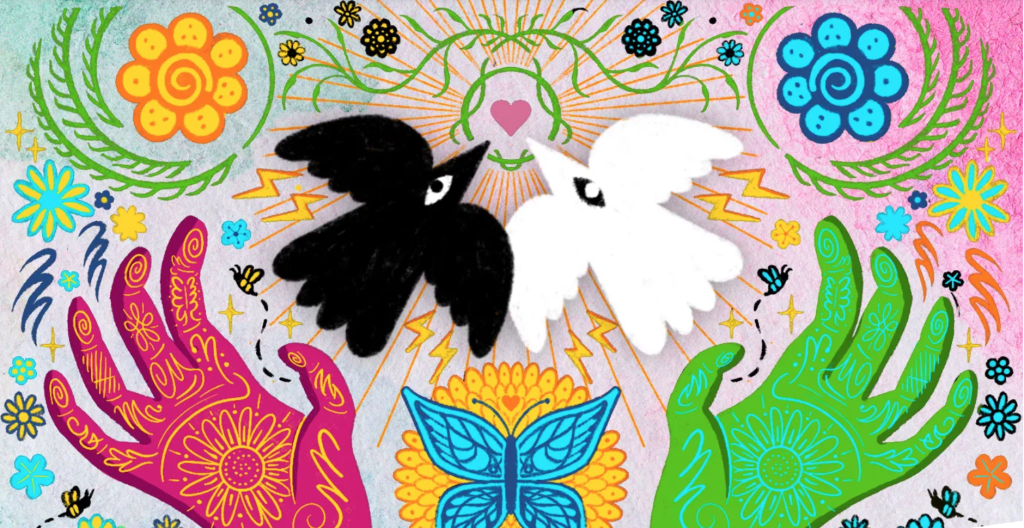
Illustration by Michael Luong borrowed from the article Murmurations: Returning to the Whole by Adrienne Maree Brown
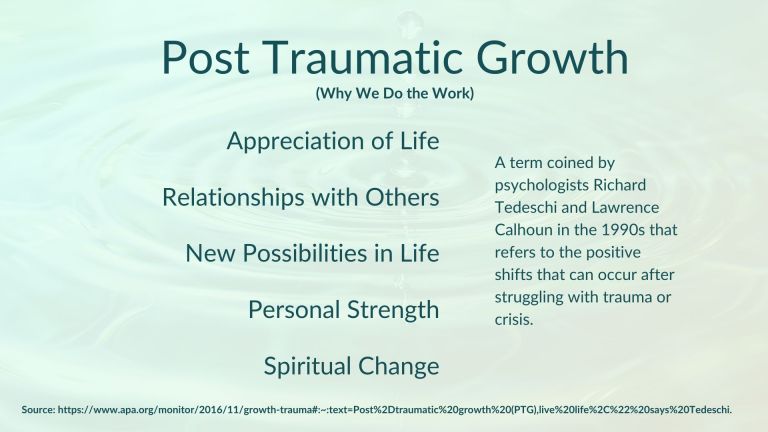
Post-traumatic growth is concept developed by Richard Tedeschi and Lawrence Calhoun that acknowledges and measures (with the post-traumatic growth inventory) how people experience positive shifts after healing from trauma. This is why we do the work.
Appreciation of Life
When we work with and shift the patterns associated with trauma, we begin to feel a greater sense of gratitude and appreciation for the good things in life. Our priorities and values shift toward altruism and acknowledging the challenges and beauty of the human condition.
Relationships with Others
Relationship difficulties are one of the most significant impacts of trauma. When we begin to heal, we experience a greater sense of belonging. We increase our capacity for love, empathy, and vulnerability. We develop stronger, more supportive bonds.
Personal Strength
Trauma survivors often see themselves as fundamentally flawed or more broken than everyone else. When we heal, we begin to feel more confident and resilient. We experience our own agency more deeply. This allows us to make different meanings of our experiences and show up in life more authentically.
Spiritual Change
As we discover a newfound trust in ourselves and relationships, we begin to shift our relationship to life itself. We begin to experience life as happening for us rather than to us. We may begin to have faith in the goodness of life and develop a sense of purpose to contribute to that goodness. Wonder, awe and appreciation are characteristic of this shift.
Let's do this...
If you have read my other post, What is TRAUMA? and recognize yourself in the descriptions, you may find these domains of growth inspiring. Book a call to find out how the NeuroAffective Relational Model (NARM) process can support you in these shifts.