

Adverse Childhood Experiences (ACEs)

Adverse Childhood Experiences (ACEs)
The Adverse Childhood Experiences (ACEs) study was conducted jointly by the CDC and Kaiser between 1995 and 1997. By analyzing mountains of patient data and conducting interviews, they discovered the correlation between ACEs and some alarmingly negative outcomes in all areas of life including physical, mental, and social health. Even more significant is that these experiences are cumulative or compounded. The more of these that we have experienced, the worse the outcomes.
What are ACEs?
The ACEs study identified ten conditions or experiences that had the strongest correlation to negative outcomes. I’ll add here that all ACEs are examples of developmental trauma or attachment trauma. All trauma that happens in childhood, even if it is a shock trauma at the time, is developmental trauma because it happened during the developmental period. When the nervous system and sense of self develops around (adapts to) these conditions, the impacts are systemic and pervasive with no reference point of wellness before the trauma.

The 10 ACEs
- Physical Abuse
- Sexual Abuse
- Emotional Abuse
- Physical Neglect
- Emotional Neglect
- Mental Illness in the Household
- Violence in the Household (Specifically against Mother)
- Incarcerated Family Memebers
- Alcoholism or Substance Abuse
- Parental Divorce
Outcomes Associated with Adverse Childhood Experiences
Here are the outcomes the Kaiser-CDC ACEs study linked to these detrimental conditions (in NARM, environmental failures). The outcomes that the ACEs study failed to mention are much more subjective and will be addressed in the next section (Impacts of Developmental Trauma).
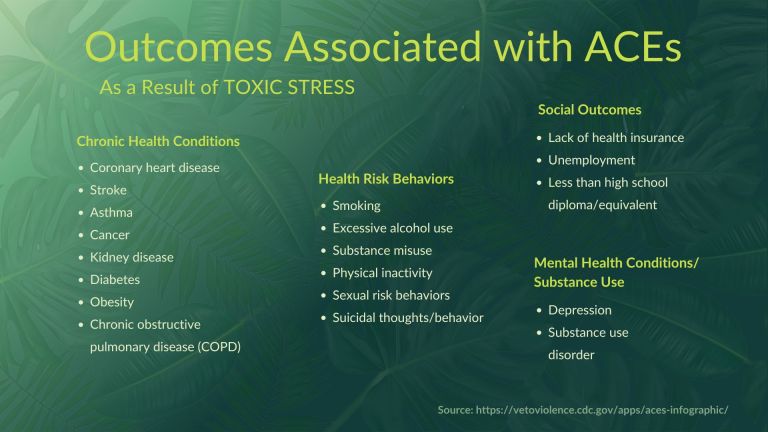
Chronic Health Conditions
- Coronary Heart Disease
- Stroke
- Asthma
- Cancer
- Kidney Disease
- Obesity
- Chronic Obstructive Pulmonary Disease (COPD)
Health Risk Behaviors
- Smoking
- Excessive Alcohol Use
- Substance Misuse
- Physical Inactivity
- Sexual Risk Behaviors
- Suicidal Thoughts/Behaviors
Social Outcomes
- Lack of Health Insurance
- Unemployment
- Less than High School Diploma/Equivalent
Mental Health Outcomes
- Depression
- Substance/Alcohol Use Disorder
Impacts of Developmental Trauma
Again, the outcomes of ACEs are cumulative. In the graphic below, we can see how ACEs fit into the broader social and historical context. ACEs arise from generational and historical trauma which then shape the social and local conditions of the environment. In other words, it didn’t start with you…or even your parents.
The Mechanism by Which ACEs Influence Health and Well-Being Throughout the Lifespan
Again, the outcomes of ACEs are cumulative. In the graphic below, we can see how ACEs fit into the broader social and historical context. ACEs arise from generational and historical trauma which then impact and shape the social and local conditions of the environment. In other words, it didn’t start with you…or even your parents.

The ACEs Pyramid (from the bottom up)
- Generational Embodiment/Historical Trauma
- Social Conditions/Local Context
- Adverse Childhood Experiences (ACEs)
- Disrupted Neurodevelpment
- Social, Emotional, & Cognitive Impairment
- Adoption of Health Risk Behaviors
- Disease, Disability, & Social Problems
- Early Death
The ACEs Pyramid Statistics
- 1 in 6 adults experience 4 or more types of ACEs
- At least 5 of the 10 leading causes of death are associated with ACEs
- 61% of adults had at least one ACE and 16 % had four or more types of ACEs
- Females and racial/ethnic minority groups were at greater risk for experiencing 4 or more ACEs
- Individuals with ACE scores of 4 or more were 12 times more likely to have attempted suicide
- People with ACE scores of 4 or more were 7 times more likely to be alcoholic,
- People with ACE scores of 4 or more were 10 times more likely to be have injected street drugs
- People with ACE scores of 6 and higher have an almost 20‐year shortening of lifespan.
The CDC has may pages of information about ACEs including statistics and prevention.
SHARE THIS PAGE…